
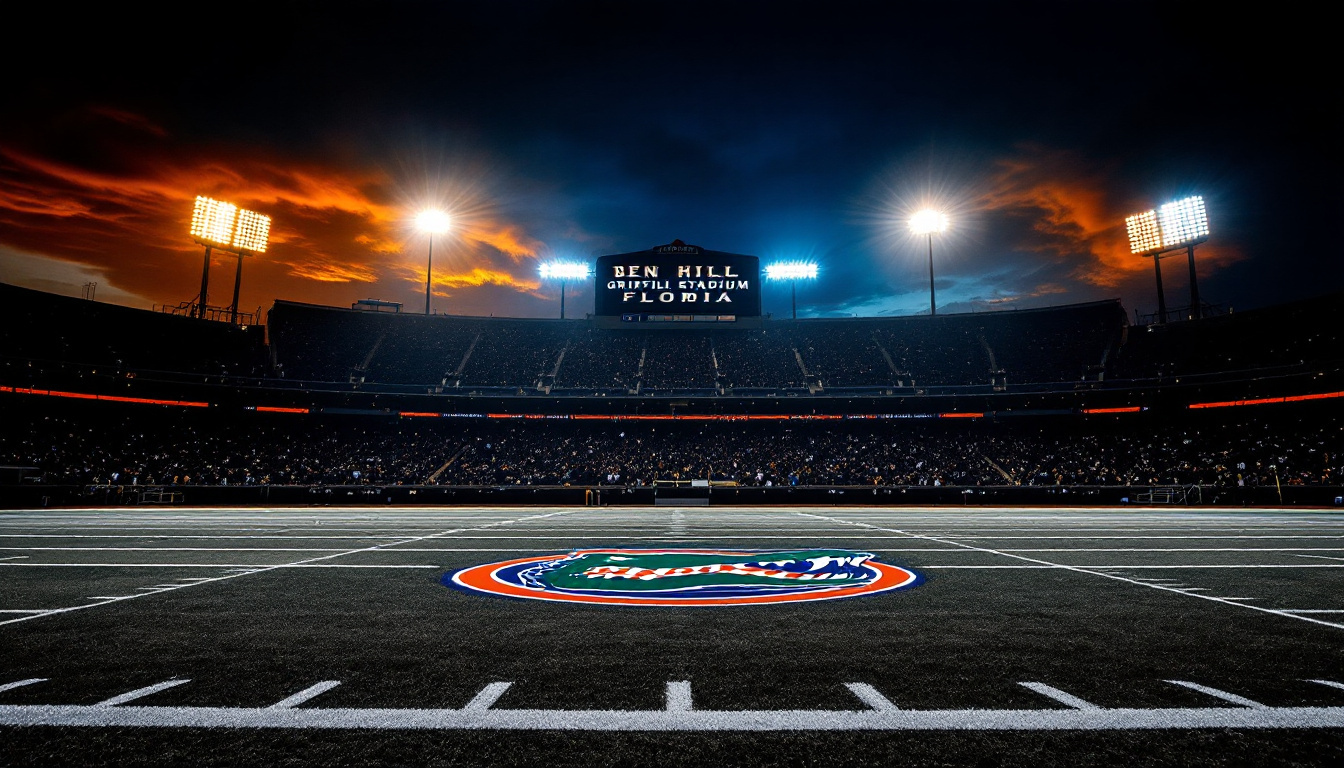
Saturday night at Ben Hill Griffin Stadium in Gainesville, tens of thousands of Florida Gators fans extended their arms, clapped their hands together like alligator jaws, and performed the "Gator Bait" chant for the first time in six years. The stadium shook. Social media exploded. And somewhere, a committee of university administrators who thought they'd killed a tradition forever quietly updated their résumés.
It took exactly one new university president to undo six years of performative cowardice.
The chant was banned in June 2020 by then-University of Florida President Kent Fuchs, who folded faster than a card table in a hurricane when the George Floyd protests swept through every institution in America. Fuchs issued a statement at the time that was a masterpiece of bureaucratic surrender: "While I know of no evidence of racism associated with our 'Gator Bait' cheer at UF sporting events, there is horrific historic racist imagery associated with the phrase."
Read that again — actually, don't, because it's infuriating enough the first time. He admitted there was zero evidence the chant was racist at Florida. None. Not a single incident, not a single complaint with any substance behind it. But because artwork from the late 1800s and early 1900s — more than a century ago — depicted something horrible using alligators and the word "bait," a football tradition beloved by millions had to die.
That was the standard in the summer of 2020. If someone on Twitter could connect two dots with enough creative squinting, institutions would torch their own traditions just to avoid a headline. Fuchs wasn't solving a problem. He was buying insurance against a mob that had already moved on to the next target before his press release hit inboxes.
New UF President Stuart Bell, who took over in July 2026, apparently has a different philosophy. His explanation for bringing the chant back was two words that would've saved a lot of universities a lot of grief six years ago: "Traditions matter."
That's it. No 14-page diversity impact assessment. No listening sessions. No committee of consultants billing $400 an hour to determine whether clapping your hands together constitutes structural oppression. Just a guy with a functioning spine saying the obvious thing out loud.
What makes the whole episode worth examining isn't just that a chant came back. It's what the ban revealed about how institutional decisions actually get made during moral panics. Nobody at Florida conducted a study. Nobody surveyed students or alumni. Nobody produced evidence that the chant had ever been used in a racist context at a single Gators game in the entire history of the university. A president saw which way the wind was blowing in June 2020 and made a calculation — not a moral judgment, a career calculation — that banning something harmless was easier than defending something defensible.
The fact that it took six years and an entirely new administration to reverse a decision that never had a factual basis tells you everything about how these institutions operate. The people who break things are never the ones who have to fix them. Fuchs got his headlines, got his credit from the "right" circles, and moved on. Bell inherited the mess and had to spend actual credibility to undo it.
And the "racist imagery" argument? Artwork from 130 years ago that nobody in that stadium had ever seen, connected to a chant that nobody in that stadium had ever associated with anything other than football. By that standard, you could ban half the English language if you dug deep enough into the 1890s.
Sixty thousand fans clapping their hands together on a Saturday night in Gainesville. No committee approved it. No consultant blessed it. The president said two words, and a tradition that survived everything except a moral panic came roaring back.
Turns out six years is about how long it takes an institution to remember that the mob doesn't actually buy season tickets.