
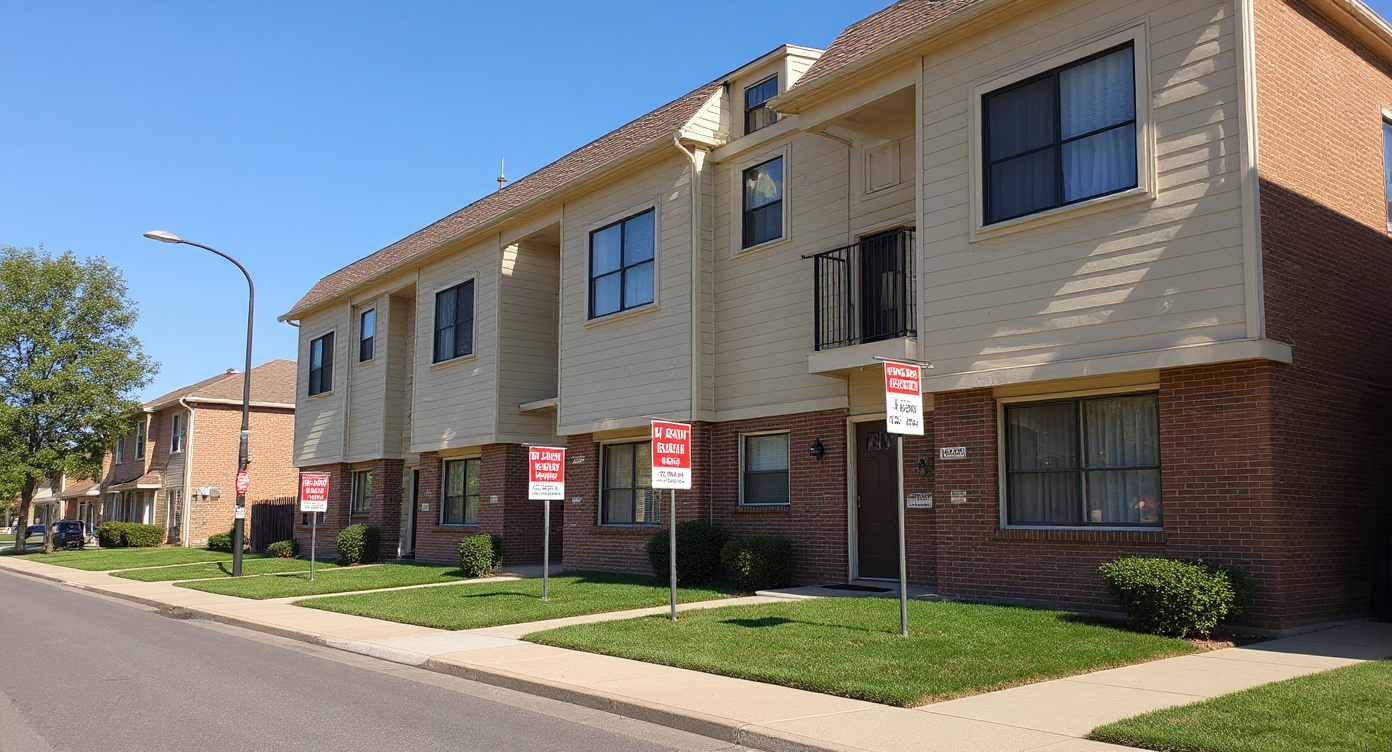
Nearly a year and a half into President Trump's second term, 46 million American renters are getting something the previous administration never offered them: relief. Rent prices are dropping across major metropolitan areas, and the data points to one policy the establishment swore would destroy the economy — mass deportations.
Turns out removing millions of people who weren't supposed to be here frees up housing for the people who are.
A White House press release laid out the numbers plainly: net international migration collapsed more than 50% nationally in 2025 — the sharpest drop on record. The actual figure, drawn from Census Bureau data, pegs the decline at 54.7%. "With far fewer new arrivals competing for housing, vacancy rates have risen and landlords are now forced to compete on price," the press release stated.
The June 2026 Apartment List rent report confirmed the trend, though with a geographic caveat. "Rent trends vary significantly by region, with annual declines currently concentrated primarily in the South and Mountain West regions," the report noted. The Sun Belt — ground zero for the border crisis housing crunch — is seeing the most direct benefit. The Northeast, Midwest, and West Coast are still seeing price increases, which tracks with where enforcement pressure and migration patterns differ.
The connection between deportation policy and falling rents, and the contrast with the Biden years is stark. Under the previous administration, rents increased by more than 50% in some cities. Energy costs climbed 25 to 30%, spiking utility bills on top of already-surging housing costs. The Biden administration allowed millions of undocumented immigrants into the country, and they had to live somewhere. That somewhere was competing with American families for the same limited housing stock.
The economic argument against deportation was always that it would cause labor shortages, drive up costs, and crash industries that depend on cheap foreign workers. We were told the whole system would buckle. Instead, the measurable result so far is that Americans are paying less to keep a roof over their heads. The system didn't buckle. It adjusted.
There's a reasonable counterpoint that the rent declines are regional and don't capture the full national picture. That's true. Markets in the Northeast and on the West Coast haven't felt the same relief. But that actually reinforces the thesis — the areas with the largest drops in migration-driven demand are the areas where rents are falling. The policy is working exactly where it was designed to work.
For years, we watched rents spiral while being told that record-breaking immigration had nothing to do with housing costs. Supply and demand apparently stopped being a thing somewhere around 2021. Now the migration numbers have reversed, vacancies are climbing, and landlords are cutting prices to fill units.
Supply and demand. It works when you let it.