
Eight hundred and fifty-one thousand fireworks. That's the number Pyrotecnico CEO Stephen Vitale and his team of dozens of technicians are preparing to launch over the National Mall, the Potomac River, and West Potomac Park on Friday night. If they pull it off, it will shatter the current world record — set by a megachurch in the Philippines roughly a decade ago — for the largest pyrotechnic display ever attempted.
The fireworks are just the finale.
President Trump announced last week that the July 4th celebration for America's 250th birthday will feature a military airshow running from 1:15 P.M. to 11:30 P.M. — over ten continuous hours of aircraft overhead. "Hundreds of Planes, of different types, sizes, and speeds, will be on display," Trump posted, calling it "the biggest, by far, in the History of the United States of America." The U.S. Air Force Thunderbirds and U.S. Navy Blue Angels are both confirmed, having completed a rehearsal flyover on June 12th.
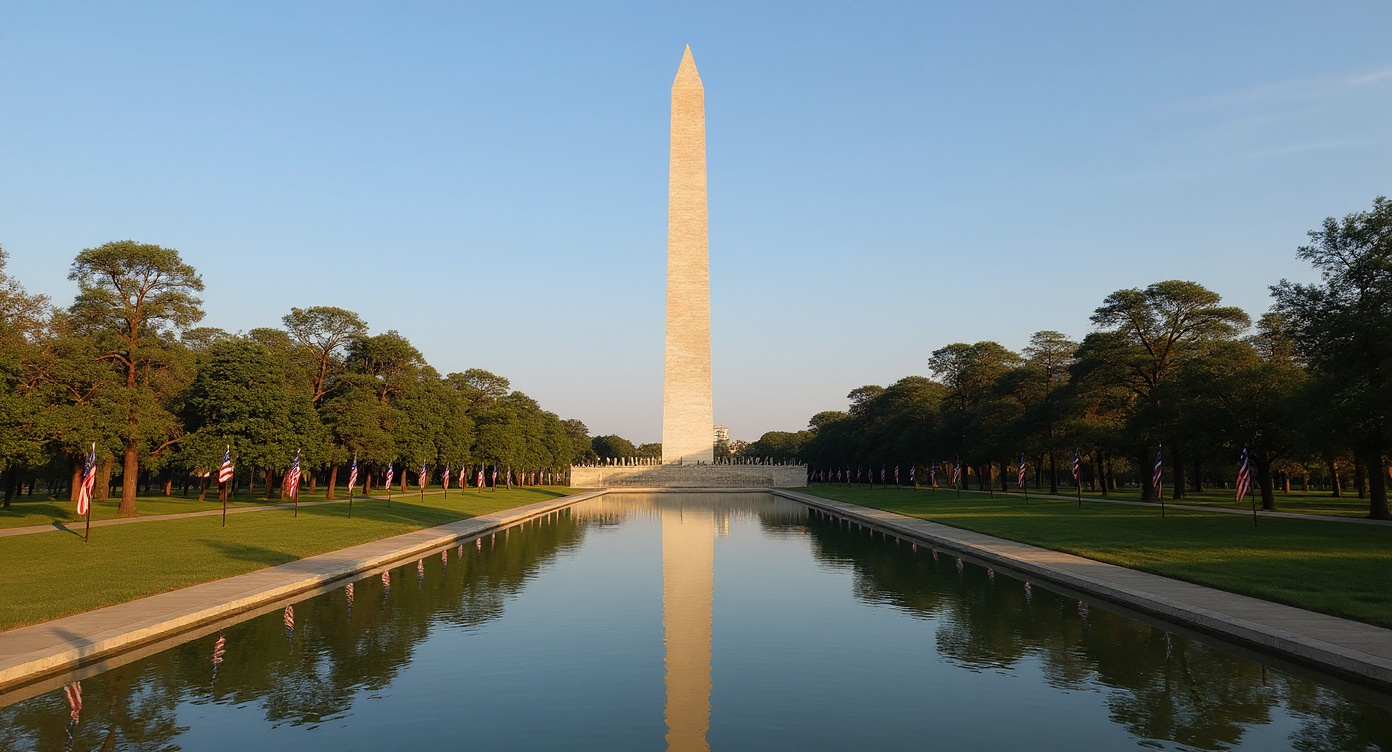
The evening program, branded "Tribute to America," kicks off at the Lincoln Memorial and Washington Monument at 7:00 P.M., with more than 300 members of military bands, orchestras, and ceremonial units performing patriotic standards. Trump is scheduled to speak at 9:00 P.M. The fireworks launch at 10:30 P.M. from multiple sites stretching across the Mall and onto eight barges floating in the Potomac — a setup Vitale described as "fireworks in stereo."
Julie Heckman, Executive Director of the American Pyrotechnics Association, put the scale in context. The traditional D.C. Fourth of July show uses "between 60 and 85,000 aerial shells and effects," she told NPR. "So D.C. is looking at 10 times that quantity in setting this world record." The display will run approximately 40 minutes — roughly four times the length of the usual 10-minute show — using shells sourced from manufacturers across Asia and Europe.
Trump signed an executive order on January 29, 2025, creating Freedom 250, the White House commission that took over all D.C. programming for the semiquincentennial from the congressionally chartered America250 organization. We watched the usual objections roll in: it's too political, it's too expensive, it's too Trump. The complaints arrived on schedule, like fireworks on a timer.
Here's what's useful about those objections: they clarify exactly who finds a 250th birthday celebration for the United States to be a problem. The same corners of the commentariat that spent the last several years explaining why the founding was actually a tragedy are now irritated that someone is throwing a party anyway. The critique isn't really about logistics or taxpayer dollars. It's that the event is unapologetically patriotic, and that offends people who believe patriotism requires an asterisk.
Vitale, for his part, isn't thinking about the politics. "Our main focus is to make this the most memorable fireworks display that this generation will have ever seen," he said. Heckman noted one variable nobody can control: "We hope that we don't have a night where the humidity kind of hangs the smoke." That's the operational concern — not whether America deserves a birthday, but whether the weather cooperates for the show.
The last time the country hit a round-number birthday like this was 1976. Gerald Ford was president. The tall ships sailed into New York Harbor. It was a bicentennial — 200 years. Nobody argued about whether we should celebrate. The debate wasn't whether to throw the party but how big to make it.
Fifty years later, the party is bigger. Ten hours of military aircraft. Nearly a million fireworks. The Thunderbirds and Blue Angels in the same sky. A pilot from the June rehearsal flyover, captured on cockpit video, said it plainly: "Thank you America for all that you are and all that you will be."
That's the whole program, really. Two hundred and fifty years of constitutional republic, and the response is either a ten-hour airshow or an op-ed about why we should feel complicated about it.