
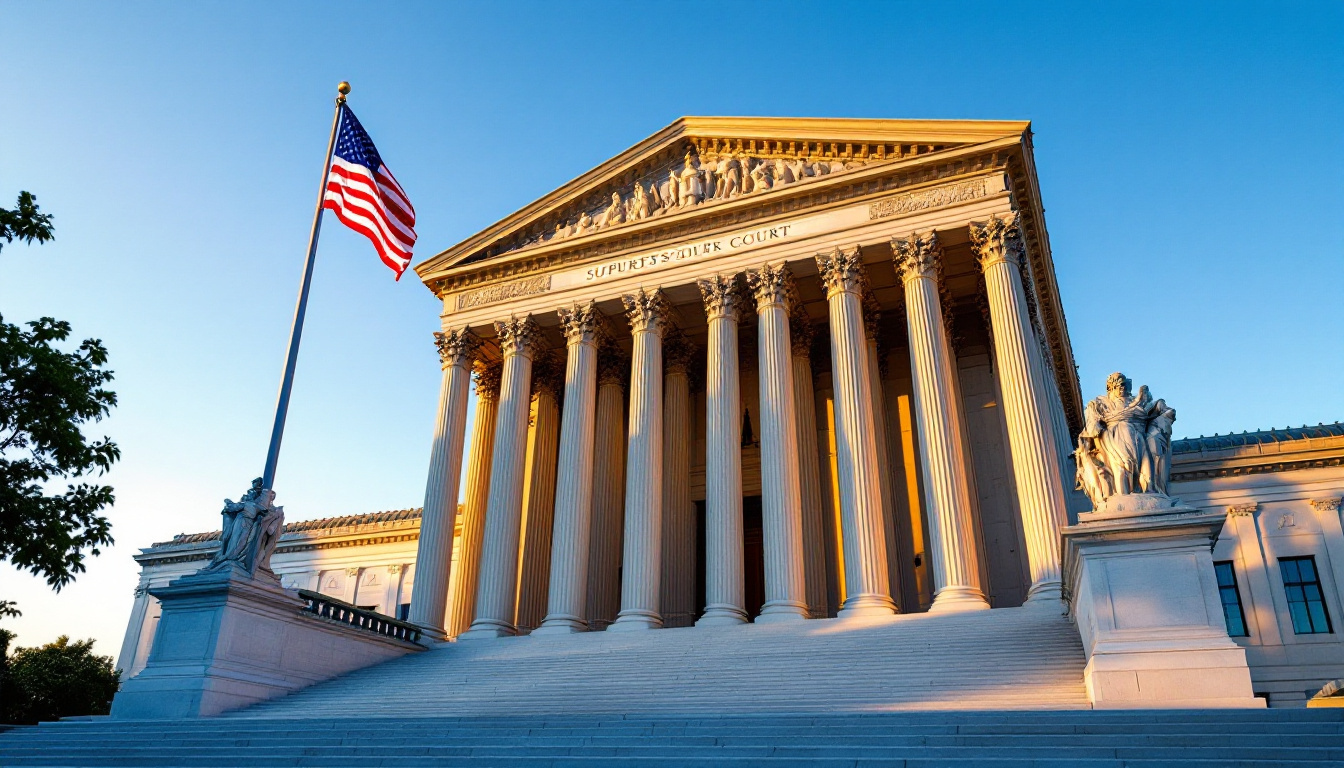
Eight justices. One dissent. That was the margin when the Supreme Court ruled Monday to green-light the Trump administration's border wall construction in the Big Bend preserve in Texas. The lone holdout was Justice Ketanji Brown Jackson.
Eight to one. In a court that can barely agree on lunch orders, that's not a ruling. That's a dismissal.
The case centered on a lower court judge who had issued an injunction blocking wall construction along the Big Bend sector of the southern border — a stretch covering more than 500 miles that includes Big Bend National Park. The administration moved to resume building, the judge said no, and the Supreme Court said the judge was wrong. Overwhelmingly.
Reporter Josh Gerstein summarized the outcome plainly: "SCOTUS, 8-1, green lights Trump admin's border wall construction in Big Bend preserve in Texas." CBS News confirmed the Court "cleared the way for the Trump administration to resume building a border wall." No ambiguity. No conditional language. No "narrow ruling on procedural grounds." Just a near-unanimous bench telling an activist judge to sit down.
What makes this one sting for the opposition is the math. This wasn't a 5-4 party-line split they could spin as "controversial" or "deeply divided." Liberal-appointed justices looked at the injunction and couldn't find a constitutional leg for it to stand on. The separation-of-powers question wasn't close. Congress authorized border security funding. The executive branch directed where the wall gets built. A district court judge deciding he knew better than both branches wasn't a bold stand for the judiciary — it was overreach, and SCOTUS treated it accordingly.
Justice Jackson's solo dissent is almost more useful than a unanimous ruling. It establishes the floor. One justice out of nine thought the injunction deserved to survive. One. The legal argument against wall construction in this sector is now a party of one, and that party is Ketanji Brown Jackson.
The timing matters. We're coming off midterm elections where border security dominated the conversation in every competitive race. Hundreds of migrants — mostly Hondurans, per Reuters — recently left the Mexican border town of Metapa de Dominguez in a caravan headed north. The political class spent months arguing about whether the border is a crisis or a talking point. SCOTUS just settled which branch of government gets to respond to it.
Activist judges have been the left's favorite workaround since 2017. Can't win a vote in Congress? Find a friendly district court. Can't win a referendum? File in the Ninth Circuit. The strategy works until it reaches the only court that can't be forum-shopped. And at that court, the strategy just went 1-8.
White House Chief of Staff Stephen Miller didn't need to say much. The scoreboard said it for him. Wall construction in Big Bend resumes. The injunction is dead. The judge who issued it just watched eight of nine justices explain, in the clearest possible terms, that the Constitution doesn't work the way he thought it did.
One dissent out of nine. That's not a legal defeat. That's a rounding error.