
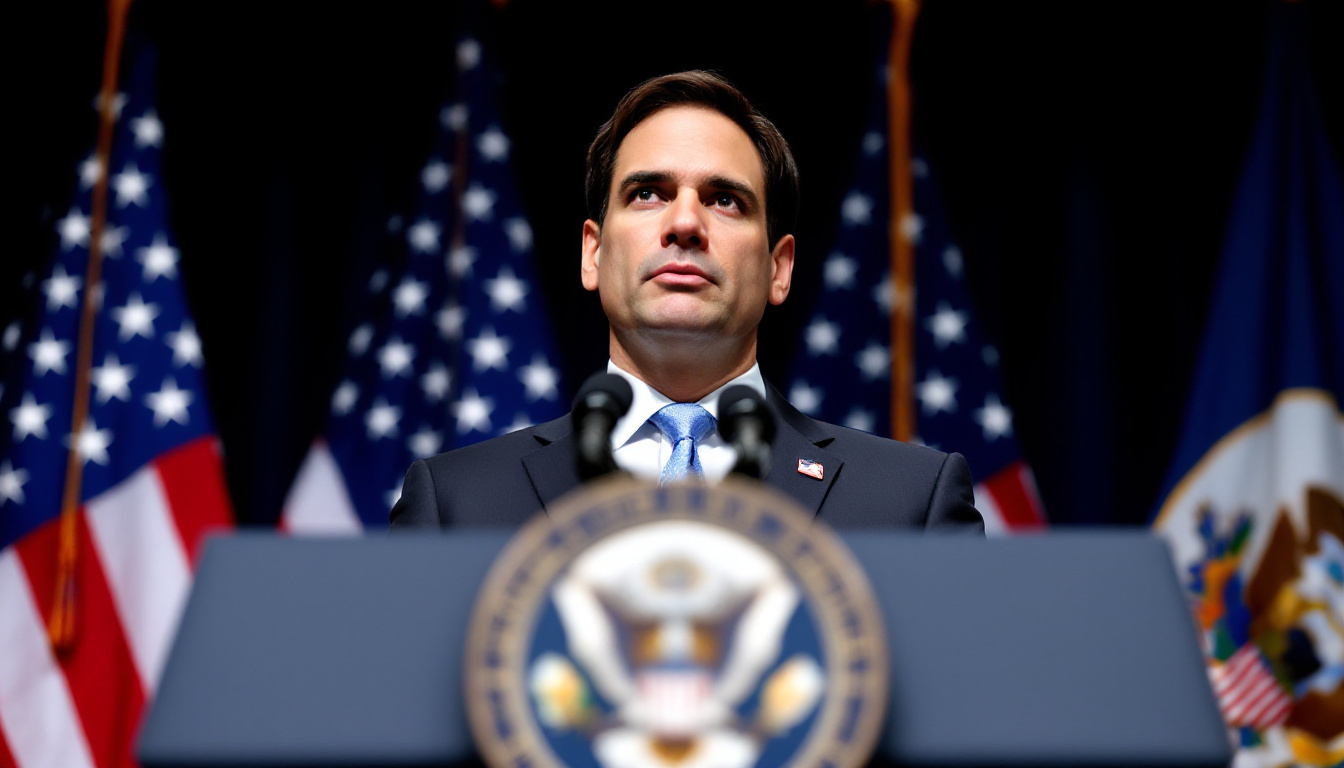
Iran showed up to the negotiating table with seven demands — including lifting the Navy blockade and reparations — and Secretary of State Marco Rubio responded by going on camera and calling them "outrageous and ridiculous and really not realistic." Not behind closed doors. Not through a spokesman. On the record, at the G7 foreign ministers meeting, with the whole world watching.
That's what happens when you send a Secretary of State who isn't looking for a Nobel Peace Prize.
Rubio told reporters on November 9th that talks with Iran have stalled completely. "I wouldn't say we're on the verge of a breakthrough," he said, in what qualifies as the diplomatic understatement of the year. Qatar's Prime Minister Mohammed bin Abdulrahman Al Thani has been serving as mediator, shuttling between Washington and Tehran, and apparently Tehran's wish list got longer with every trip.
The seven demands Iran put forward read like a regime that hasn't looked in a mirror lately. They want the U.S. to lift the naval blockade. They want reparations. They want, essentially, to negotiate from a position they don't occupy. Rubio didn't entertain any of it.
"The President would always prefer to solve this and every problem diplomatically," Rubio said. "Sometimes that's not possible, unfortunately." That second sentence did more work than most press conferences manage in an hour. It wasn't a threat. It was a weather report.
The military posture backing up Rubio's words isn't theoretical. U.S. Central Command has assembled a 20-member team specifically for blockade operations. Task Force Iron Gate — the Navy's presence choking off the Strait of Hormuz — is already in position. Missile targets on Qeshm Island have been identified. This isn't saber-rattling from a Pentagon briefing room. The hardware is already there.
Rubio made the defensive posture explicit: "If there's a clear and present threat to shipping or to our forces in the region, we have a right to defend ourselves." No qualifications. No "proportional response" language. No consultations with allies before acting.
President Trump, for his part, framed the entire situation with the directness we've come to expect. "It depends on whether or not they sign a very strong agreement," Trump said of the military option. Then the kicker: "Highly unlikely it's going to be necessary. They're a failing nation." Five words that did more damage to Tehran's negotiating position than a fleet of aircraft carriers.
The contrast with previous administrations isn't subtle. Iran's playbook for two decades has been to make maximalist demands, wait for Washington to meet them halfway, pocket the concession, and make new demands. That cycle required a willing partner in the State Department. Rubio isn't willing.
Trump addressed the broader strategy with characteristic bluntness. "A lot of people didn't like his comments, but not me," he said of Rubio's public dismissal of Iran's terms. "If you had it to do again, I'd have to do it again because long-term, it's the only answer."
Iran came to the table with seven demands. They left with zero concessions and a 20-member military planning team staring at them across the Strait of Hormuz.