
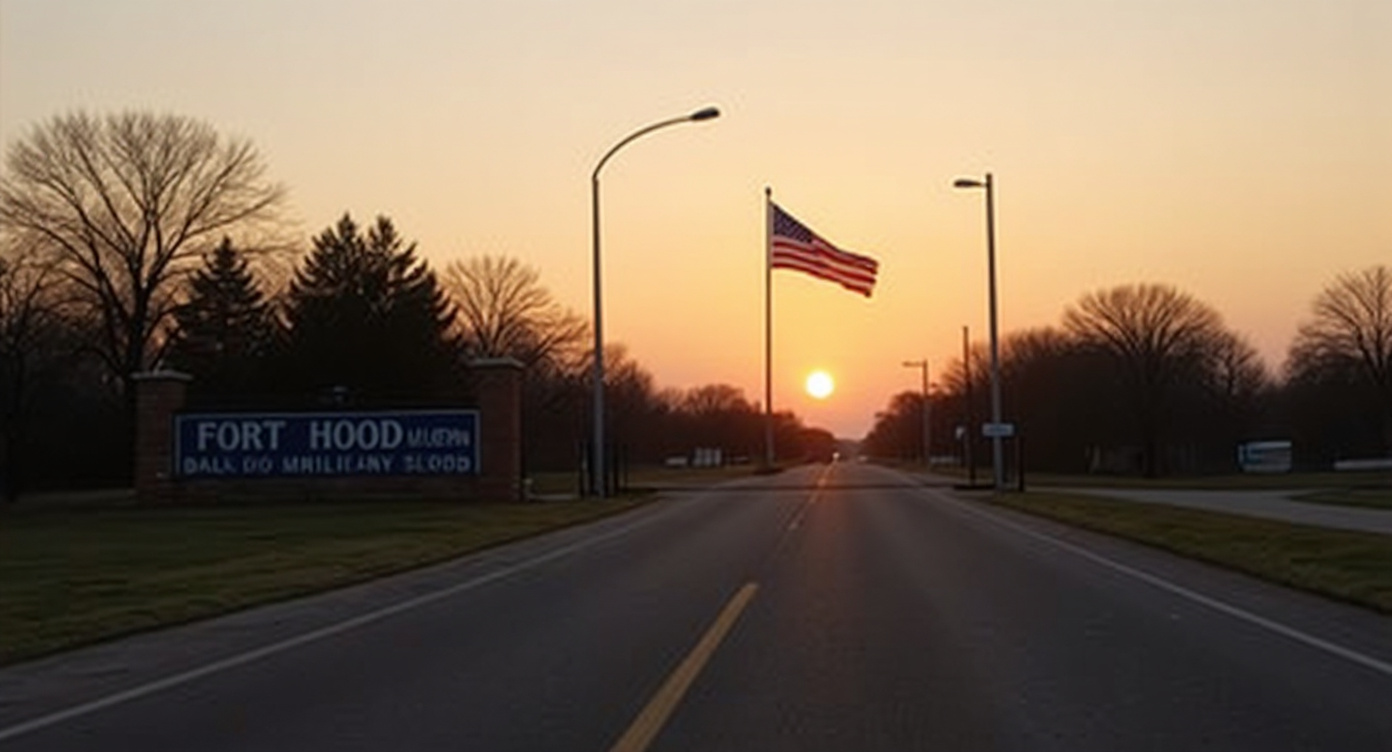
At approximately 7 p.m. on a Monday night, a chaplain and the commandant of the United States Disciplinary Barracks at Fort Leavenworth walked to the cell of Nidal Malik Hasan, the former Army Major who murdered 13 people and wounded 31 others at Fort Hood, Texas in November 2009. The notification, required under Army Regulation 190-55, was straightforward: a firing squad execution has been scheduled for December 3.
Seventeen years. That's how long it took for these family members to get justice.
Chief Pentagon spokesman Sean Parnell confirmed that President Trump had approved the execution plan recommended by Defense Secretary Pete Hegseth. Parnell's statement was not diplomatic: "The Secretary of the Army will set the time and place of the execution. Judgement day for Hasan has finally come."
Check out War Secretary Hegseth's stone cold response to Hasan finally getting an execution date
Hasan, an Army psychiatrist, opened fire at the Soldier Readiness Processing Center at Fort Hood — a facility where soldiers report for pre- and post-deployment processing. His victims were servicemembers preparing to deploy or returning home. He told the court during his 2013 court-martial that he acted "to protect Islamic insurgents from U.S. military forces." He represented himself at trial and was convicted on all counts.
The military's appeals process — mandatory, not requested by Hasan — dragged the case through years of procedural review. His final appeal was refused in 2023. He petitioned the Supreme Court in 2024 over public trial rights. The high court declined to hear the case.
Now his civilian attorney, John Galligan — a retired colonel and former military judge — has characterized the execution as "political theatre" and "a rush." Galligan told reporters: "For the life of me, I don't know what they are trying to accomplish in such a rush fashion."
A rush. Thirteen people were murdered in 2009. The conviction came in 2013. The final appeal was denied in 2023. The execution is scheduled for December 2026. Seventeen years from shooting to needle — or in this case, firing squad. Calling that a "rush" requires a relationship with the English language that most of us don't share.
Galligan also cited Hasan's medical condition — he's paralyzed from the waist down and uses a wheelchair — as a reason to reconsider. That paralysis came from return fire during the massacre. The wounds he sustained while murdering thirteen people are now supposed to be the reason we don't hold him accountable for murdering thirteen people.
Yale Law lecturer Eugene R. Fidell offered the legal establishment's version of the same objection, telling reporters: "It frankly might outlast the current administration, and who knows if the next one will have the same penchant for executions." The quiet part being said out loud: delay long enough and maybe the political will evaporates.
The execution will be conducted at Fort Hood — the same post where Hasan killed those soldiers and civilians. The Army hasn't carried out an execution since 1961. South Carolina conducted three firing squad executions in 2025, the first in the country since 2010, so the procedural framework exists and has been recently tested.
Then there's the classification that hung over this case for years. The Obama administration labeled the Fort Hood massacre "workplace violence" — not terrorism — which denied the victims Purple Hearts and combat-related benefits they were entitled to. Congress eventually passed legislation in 2015 to override Obama and correct the obvious mistake, but the families spent six years fighting their own government for recognition of what everyone already knew: a man who shouted "Allahu Akbar" before opening fire on a military installation was not having a bad day at the office.