
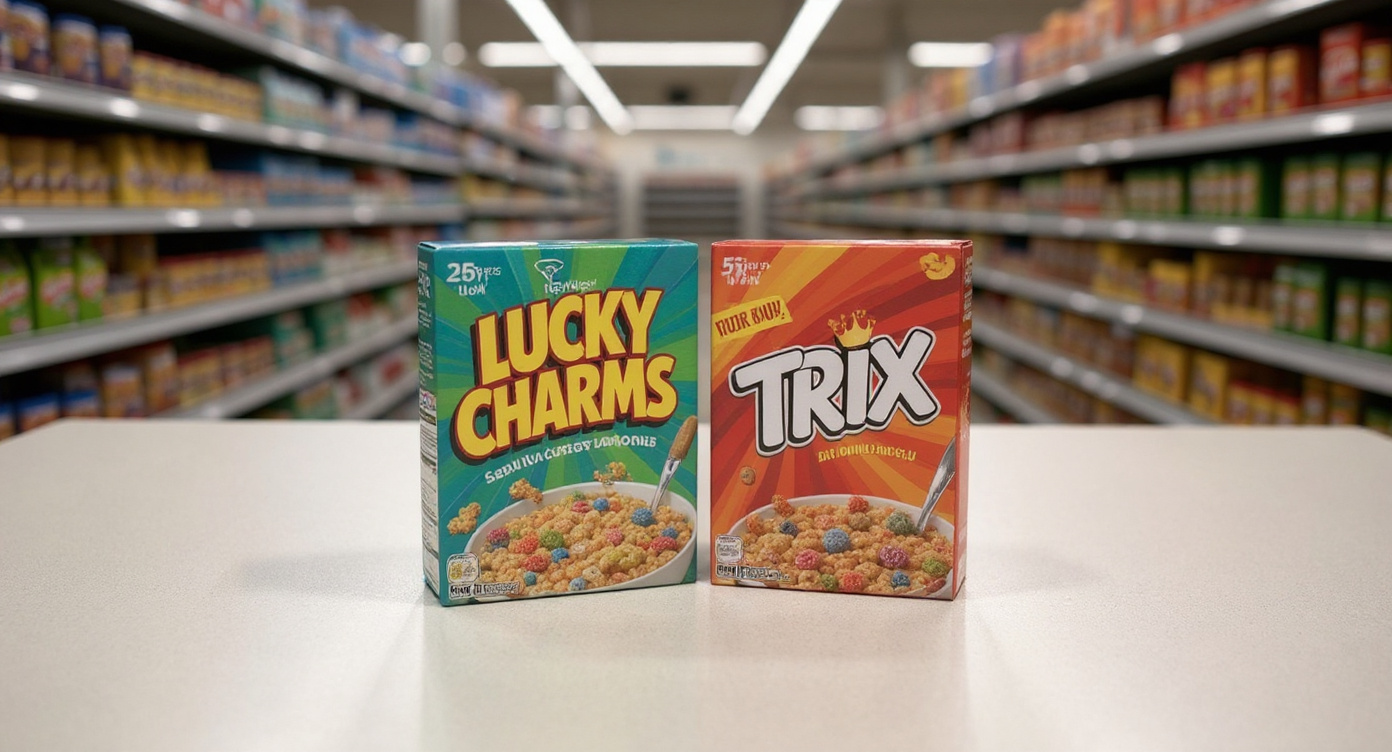
General Mills just announced it will strip eight petroleum-based synthetic dyes from every cereal it sells in the United States. Lucky Charms, Trix, all of them — reformulated by the end of 2027. Ninety percent of the company's U.S. retail cereal portfolio has already been cleared.
A year and a half ago, Robert F. Kennedy Jr. was a conspiracy theorist for suggesting that maybe — just maybe — kids shouldn't be eating petroleum derivatives for breakfast.
Kennedy launched his pressure campaign against artificial dyes in March 2025, shortly after taking over as Health and Human Services Secretary. He set a voluntary deadline of end of 2026 for the food industry to clean up its act. The industry blinked. General Mills CEO and Chairman Jeff Harmening put out a statement that read less like corporate defiance and more like a white flag: "Knowing the trust families place in us, we are leading the way on removing certified colors in cereals and K-12 foods."
Leading the way. That's a fun phrase from a company that spent decades loading Trix with the stuff and telling parents it was fine.
Bethany Quam, President of Big G Cereal at General Mills, added that "as the leader in cereal, General Mills is focused on giving people what they are looking for from the brands they know and love." Translation: our customers started reading ingredient labels, and we'd like to keep having customers.
General Mills isn't alone in the stampede toward the exit. Kraft Heinz — whose North America President Pedro Navio oversaw the shift — is pulling dyes from Kool-Aid, Jell-O, Crystal Light, and Jet Puffed marshmallows. Mars, Hershey, Campbell's, WK Kellogg Co., Nestle, Smucker's, and PepsiCo have all moved in the same direction. Target's Executive Vice President Cara Sylvester noted that 85 percent of the retailer's cereal sales are already dye-free, saying "consumers are increasingly prioritizing healthier lifestyles." Sam's Club has hit 96 percent progress on removing 40 artificial additives from its shelves.
Kennedy himself put it plainly: "Nobody wants to eat petroleum; everybody knows that caused health problems."
The usual objection from the "trust the science" crowd was that these dyes were FDA-approved and therefore sacred. Which is an interesting standard to apply to an agency that approved the ingredients, watched Europe ban most of them years ago, and never revisited the question until a Kennedy forced the issue. The FDA didn't lead here. It got dragged.
The K-12 angle is the part that matters most to families. General Mills committed to prioritizing school foods in the reformulation timeline, which means the cafeteria trays that feed millions of kids every day are getting cleaned up too. That's not a PR stunt. That's a policy outcome.
Secretary Kennedy posted on social media that General Mills "is now committing to eliminate artificial dyes from its U.S. products within two years." Two years. The entire American cereal aisle, reformulated, because one guy in government said out loud what every parent suspected.
The food industry spent decades insisting the dyes were safe, then spent eighteen months quietly reformulating every product on the shelf. Either the dyes were never necessary in the first place, or corporate America just admitted they were selling something they shouldn't have been.
Pick whichever answer makes you more comfortable.