
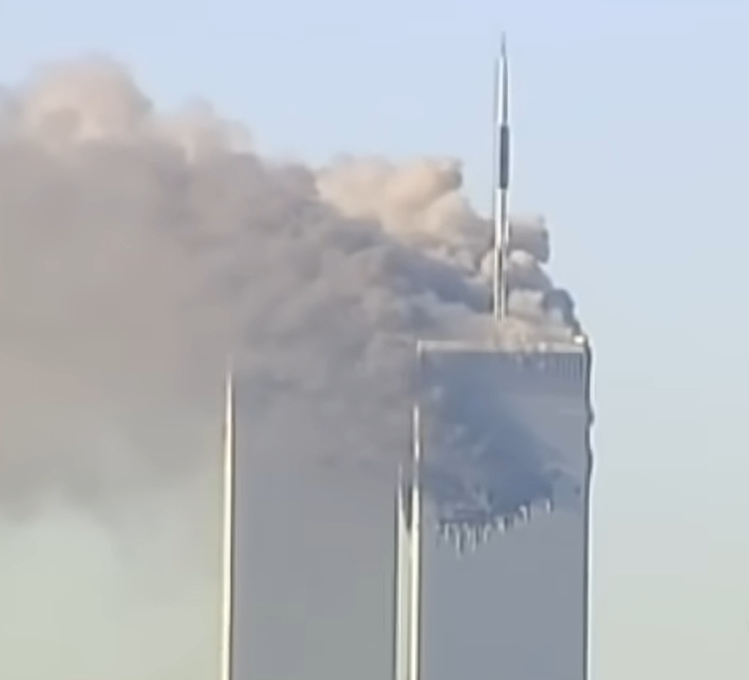
A year before September 11, 2001, an Army intelligence program called Able Danger produced charts identifying Mohammed Atta and the New York al-Qaeda cell that would go on to murder nearly 3,000 Americans. The program operated out of the Army's Information Dominance Center. The people running it tried to hand that intelligence to the Justice Department three separate times.
They were blocked all three times.
That's the claim from former Pennsylvania Congressman Curt Weldon, who served as vice chairman of the House Armed Services Committee and oversaw the data-mining operations that produced those charts. Weldon calls Able Danger "the biggest cover-up in modern American history" — and on the 25th anniversary of 9/11, he's finally publishing the manuscript he finished in 2006 with former CIA analyst Dr. Peter Pry but sat on for nearly two decades.
The details of this story go well beyond a missed intelligence tip. Weldon says those Able Danger charts naming Atta were shown directly to National Security Advisor Steve Hadley, who acknowledged that President Bush had never been briefed on the program. A congressionally created body called the Gilmore Commission reviewed the data. The program existed. The intelligence existed. And according to Weldon, three institutional barriers made sure it never reached the people who could have acted on it.
Barrier one: in 1999, Weldon proposed a CIA fusion center to consolidate intelligence streams. The CIA rejected it. Barrier two: Jamie Gorelick's "firewall" memo, which separated military intelligence from civilian law enforcement — making it structurally impossible for Able Danger's findings to reach the FBI. Barrier three: the 9/11 Commission itself. Weldon says executive director Philip Zelikow removed Able Danger from the commission's final report entirely.
Army intelligence officer Colonel Tony Shaffer tried to brief Zelikow on what Able Danger had found. For his trouble, Shaffer's security clearance was yanked and his career torched. Meanwhile, former National Security Advisor Sandy Berger was caught stealing and destroying classified 9/11 documents from the National Archives before his testimony. Berger's punishment: a slap-on-the-wrist plea deal. The man who destroyed evidence got a fine. The man who tried to present evidence got his career destroyed.
Weldon's claims don't stop at Able Danger. He says at least ten independent sources — including a U.S. operative he describes as being "in the room when the deal was cut" — confirm that Osama bin Laden received safe harbor in Iran after 9/11. His framing is blunt: "We Sent Troops to the Wrong Country." He also claims U.S. intelligence had advance warning of the USS Cole bombing and says he was personally warned in 2005 of an Iranian plot to crash a Canadian airliner into New Hampshire's Seabrook nuclear reactor.
The obvious question is why this took twenty years to publish. Weldon says he finished the manuscript with Dr. Pry in 2006. Then lawyers warned him that publishing would intensify attacks on his family. That warning wasn't hypothetical — federal agents raided his daughter's home just before his 2006 election, which he lost. The 25th anniversary of 9/11 forced his hand.
Watch Weldon's full interview and comments here: https://rumble.com/v7fygw0-exclusive-former-congressman-weldon-claims-bin-laden-hid-in-iran-after-911.html?e9s=src_v1_ucp_v
Weldon is now calling on President Trump to appoint a new, impartial 9/11 commission and to engage Putin on buried U.S.-Russia history regarding fissile material headed for Iran. Whether you take every claim at face value or not, the documented facts create their own problems. Able Danger existed. The charts existed. Colonel Shaffer lost his clearance for trying to talk about them. Sandy Berger walked into the National Archives and walked out with classified documents in his socks.
The 9/11 Commission was supposed to be the definitive accounting. Twenty-five years later, a former vice chairman of the House Armed Services Committee says the commission's executive director personally removed an Army intelligence program from the final report — and the Army officer who tried to object had his career ended.
That's not a conspiracy theory. That's a paper trail.