
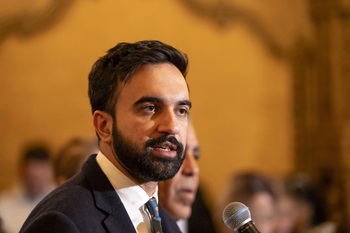
New York Times reporter Jeremy Peters set out to do what should have been the easiest interview in politics: ask members of the Democratic Socialists of America to explain how their ideology differs from communism. He came back empty-handed.
Not because he didn't ask. Because they couldn't answer.
Peters, speaking on David Remnick's podcast, described what happened when DSA-aligned candidates faced this basic question. "By and large, a lot of these candidates come out of the activist wing of the party," Peters said. "They're very into reading Karl Marx and left-wing theory, and we've seen time and time again that a lot of them just don't withstand the scrutiny."
The struggle isn't limited to a single awkward interview. Peters noted a pattern: "There's been a slew of interviews just like this where candidates who represent the Democratic Socialists of America have really struggled to articulate how they don't subscribe to communism."
Bill Maher picked up the story on his show, framing it as evidence that radical ideology has moved from the faculty lounge into actual Democratic Party politics. "Two stories from this week, I think, will show you that this has now infected our political discourse," Maher said.
The timing matters because the DSA isn't some fringe book club anymore. Its members hold elected office. They vote on legislation. They shape the Democratic Party's platform from the inside. And when a reporter from America's newspaper of record asks them the most predictable question in the world — "How is this not communism?" — they fumble it like a seventh-grader who didn't read the assignment.
Maybe the fumbling is the answer.
The DSA's own internal caucus, the Marxist Unity Group, doesn't seem confused at all. Their stated goal, per their own materials, is creating "a fully liberated classless society. In a word, communism." That's not a right-wing hit piece pulling words out of context. That's their caucus, using their language, on their platform.
So the question Peters asked isn't really that hard. The answer is right there on the DSA's own website. The problem is that saying it out loud in a New York Times interview tends to be bad for electability — even in deep-blue districts.
DSA co-chair Megan Romer and the rest of the organization's leadership haven't exactly rushed to clarify the distinction either. When the friendly press gives you a layup — "Just tell us you're not communists" — and you whiff, the silence is its own kind of statement.
Left-wing commentators will argue this is all guilt-by-association, that the DSA is a "big tent" with many factions and the Marxist Unity Group doesn't speak for everyone. Which would be more convincing if anyone in the tent could articulate what they actually believe instead. You don't get credit for being a big tent when every pole holding it up has a hammer and sickle on it.
The pattern is familiar. The label changes every few years — progressive, democratic socialist, social democrat — but the reading list stays the same. Karl Marx. Class struggle. Collective ownership. The vocabulary rotates; the ideology doesn't.
Jeremy Peters didn't ambush anyone. He asked a question that every DSA candidate should have a rehearsed answer for by now. The fact that they still don't tells you the rehearsed answer would be worse than the silence.