
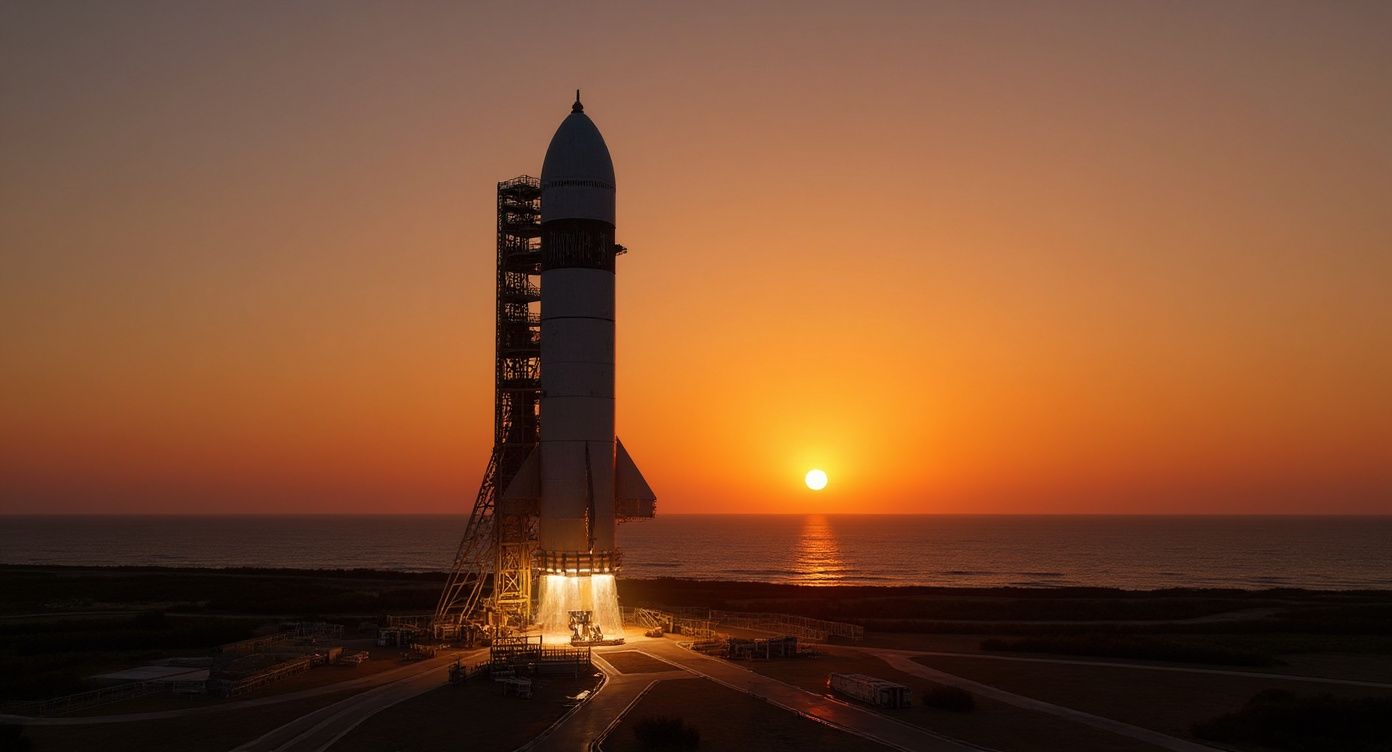
Jim Cantrell, a member of SpaceX's founding team and current CEO of Phantom Space Corp, laid out the Mars colonization playbook in a way that makes you wonder why nobody thought of it sooner. Send the robots first. Let them build the houses, set up the power grid, and get the plumbing running before a single human being steps foot on Martian soil.
"The robots build the settlement before the humans show up," Cantrell told Newsmax. "Humans eat, defecate, consume and exhale water — we're complicated. … Robots just need sunlight for electricity and the occasional lubrication for their joints."
Hard to argue with that logic. Let the robots do the hard work for us so humans can enjoy the fruits of their labor.
The plan revolves around Tesla's Optimus humanoid robots, which would be shipped ahead aboard SpaceX's Starship rocket to construct habitable infrastructure on Mars before the first crew ever launches. Elon Musk, in a recent interview on Sean Hannity's radio show, put a timeline on it — astronauts on the moon within two to three years, first humans on Mars within five years, and "thousands of people on the moon" within a decade.
"We want to ultimately make it so that anyone that wants to go to the moon can go to the moon and go to Mars," Musk said. His stated goal is nothing less than "a full-blown, self-sustaining city on the moon."
The Mars window adds a wrinkle that keeps things interesting. The planets only align for a launch every 26 months, and the trip itself takes roughly six months each way. So this isn't a weekend jaunt to Cancun. Every launch window that passes without a mission is two more years lost. Which is exactly why the robots-first approach makes sense — you send construction crews on every available window so the infrastructure is waiting when the humans finally arrive.
Meanwhile, SpaceX's Starlink satellite network continues to expand, with filings at the Federal Communications Commission for a constellation of up to 100,000 satellites. Texas Republican Governor Greg Abbott has been one of the loudest political champions of SpaceX's operations in his state, and it's not hard to see why. The jobs are real, the technology works, and the rockets actually launch.
There's a reasonable counterpoint floating around — that Musk's timelines have always been aggressive, and five years to Mars sounds like the kind of promise that becomes ten, then fifteen. Fair enough. SpaceX has missed deadlines before. But here's what the skeptics keep getting wrong: they compare Musk's pace to his own promises instead of comparing it to literally everyone else's pace. NASA's Artemis program has been grinding through delays and budget overruns for years. The European Space Agency talks a big game about Mars every decade and then quietly pushes the timeline back. China has ambitions but no Starship, no reusable rockets at this scale, and no Optimus.
The man who built reusable orbital rockets — something the entire aerospace establishment said was impossible — is now talking about pre-fabricating a Mars colony with humanoid robots. And the robots already exist. They're walking around Tesla factories right now.
"We want to make the things that people see in science fiction not fiction," Musk said. "We want to make them real."
Fifty years ago, the United States government put men on the moon with slide rules and courage. Today, the government can't build a high-speed rail line between two California cities. The moon and Mars missions of the next decade won't be run by a federal agency with a 30-year plan and a 300-page diversity statement. They'll be run by a private company out of South Texas that launches rockets, lands them on barges, and sends robots to build houses on other planets.
The future isn't a government program. It's a product roadmap.