
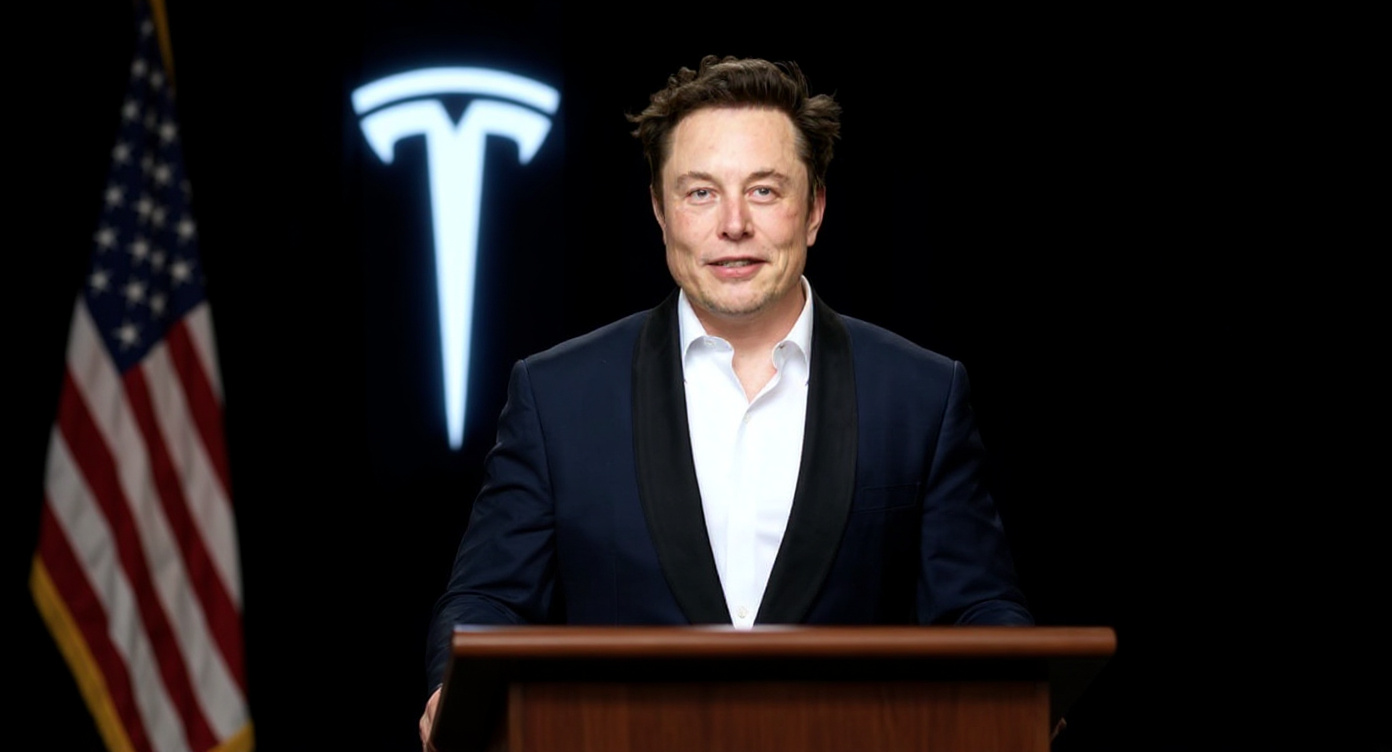
One SpaceX share. That's what every child in America is set to receive from Elon Musk starting in 2027. At the current trading price of $146 per share, with roughly 72 million Americans under the age of 18, the pledge carries an estimated price tag of $10.5 billion.
And he says it's just the beginning.
"Next year, I will give one of my SpaceX shares to every kid in America," Musk posted on October 19th. "This will be the first of many."
Six words at the end of that sentence are doing a lot of heavy lifting. "The first of many" means this isn't a publicity stunt or a one-time tax write-off dressed up as philanthropy. It's a stated commitment to repeat the process. Whether that means annually, or tied to milestones, Musk didn't elaborate. He didn't need to. The number speaks for itself.
The U.S. Census Bureau estimates 72 million minors currently live in the United States. At $146 per share — SpaceX's current valuation on secondary markets — one share per child totals approximately $10.5 billion in distributed equity. Not a government program. Not a means-tested benefit requiring three forms and a caseworker. A private citizen writing a check to the next generation out of his own portfolio.
The distribution mechanics haven't been formally announced, but the infrastructure may already exist. The U.S. Treasury Department reported that over 70 million Trump Accounts had been created by early October, with more than 60 million of those opened through automatic enrollment. The accounts were designed to give Americans — especially young ones — a direct financial stake in the country's economic future.
If SpaceX shares land in Trump Accounts, the synergy is almost too clean. A government-built savings framework meets private-sector generosity, and 72 million kids wake up one morning owning a piece of the company that's putting Americans on Mars.
The usual crowd will find something to complain about. They always do. Musk is too rich. The shares might appreciate and create taxable events. The program doesn't include undocumented children. Pick your grievance. But the underlying math doesn't care about the commentary. Seventy-two million children receiving $146 in equity — equity in a company whose valuation has done nothing but climb — is a wealth transfer from the top to the bottom that doesn't require a single congressional vote, a single new regulation, or a single bureaucrat to administer it.
That's the part that's going to bother Washington the most. Not the dollar amount. The fact that none of them were involved.
For years, the political class has promised to "invest in our children's future" through programs that invest primarily in administrative overhead. Head Start. School lunch expansions. Child tax credits that phase out at income thresholds designed by people who've never lived near one. The common thread is that every dollar passes through government hands before a fraction reaches an actual child.
Musk skipped the middleman. No committee hearings. No appropriations bill. No fifteen-month rulemaking process at the Department of Education. Just a man who builds rockets deciding that 72 million kids should own a piece of one.
The announcement landed on the same day the Treasury confirmed the Trump Accounts program had exceeded enrollment projections by a wide margin. The timing may be coincidental. The alignment isn't.
SpaceX shares traded at $146 on the day of the announcement. In 2027, when the distribution is set to occur, that number could be higher. It could be significantly higher. Every Falcon 9 launch, every Starship test, every Starlink subscriber added between now and then increases the value of what those kids will receive.
$10.5 billion. No act of Congress required.