
Abdul El-Sayed won the Michigan Democratic Senate primary on August 4 by fewer than 15,000 votes — less than 1% of the total. He never carried Detroit. That detail mattered less when his opponent, Haley Stevens, was expected to fall in line.
She didn't.
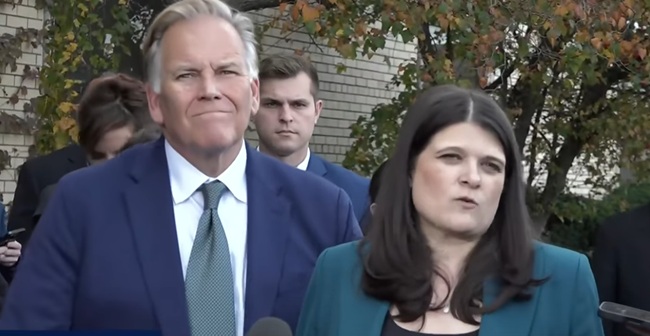
Stevens endorsed Republican Mike Rogers on November 1, telling voters, "He's right, and that's why I am endorsing Mike Rogers." Within hours, El-Sayed's winning probability on the Kalshi prediction market dropped 8 points to 68%. The aggregate polls still show him ahead, 49.3% to 45.1%, but prediction markets price in things polls don't — like what happens when the person who owns Detroit's Democratic turnout machine tells her voters to cross the aisle.
This is a state that hasn't sent a Republican to the Senate since 1994. Democrats need a net gain of four seats to flip the chamber against the current 53-47 Republican majority. Michigan was supposed to be safe money. El-Sayed was supposed to be the next progressive star — the guy Bernie Sanders once called "the most extraordinary victory that I can think of in modern American politics" after a previous campaign.
The problem with being an extraordinary progressive is that you still have to win the middle. Political analyst Nate Silver noted that El-Sayed "was actually trailing Rogers back when he and Stevens were fighting" in the primary. The margin only opened after Stevens conceded and the party consolidated. Now that consolidation is cracking at the foundation.
Two million Michigan ballots have already been cast. Stevens's endorsement lands with two days until Election Day — too late for the El-Sayed campaign to rebuild the coalition, too early for voters to forget. The timing isn't accidental. Stevens waited until the window where maximum damage meets minimum time to recover.
El-Sayed's defenders will point to the topline polling. He's still up four points. But the same people reassuring everyone about those numbers were reassuring everyone about his primary dominance right up until he squeaked through by a fraction of a percent. A four-point lead with a fractured base and a hostile Detroit endorsement isn't a cushion. It's a countdown.
The broader pattern is hard to miss. Democrats are watching Senate math tighten in states they circled months ago. In Texas, James Talarico holds roughly a two-point edge over Ken Paxton. In Alaska, Mary Peltola leads Dan Sullivan by under two points in a race already shadowed by ballot controversy. Michigan was the firewall — the race where Democrats didn't have to sweat the margins.
Now they're sweating. Liberty Nation's Mark Angelides, who broke down the endorsement math, put it simply: Stevens commands the voter networks in the exact city El-Sayed couldn't win on his own. You don't need a massive defection to flip a race this tight. You need a small one in the right zip codes.
A Republican hasn't won a Michigan Senate seat in 32 years. Two million votes are already locked in. And the woman who knows Detroit better than the Democratic nominee just told her voters to pick the other guy.