
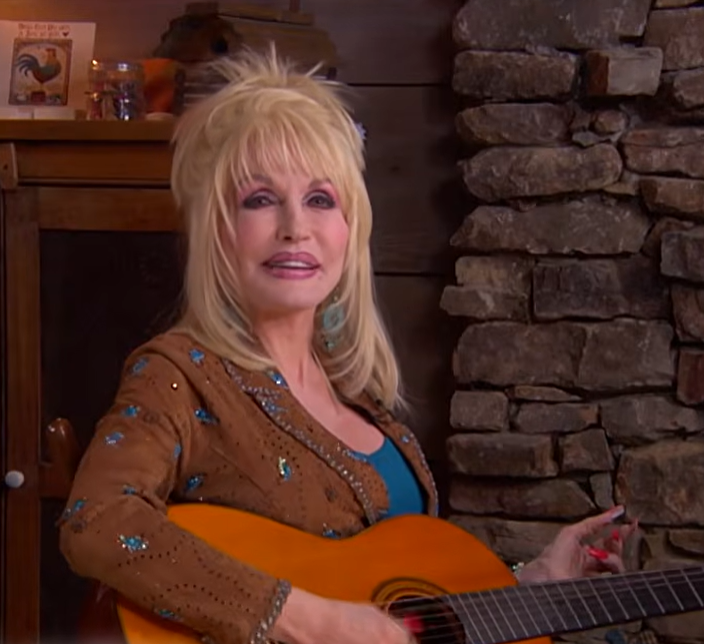
Dolly Parton died Tuesday at Vanderbilt-Ingram Cancer Center in Nashville. She was 80 years old. Her nephew and head of security, Bryan Seaver, announced her passing in a prerecorded video, saying she "lived in the light" and was now "in the arms of Jesus."
Ten Grammys. Fifty-five nominations. Over 100 million records sold. And somehow, none of those numbers come close to capturing what we actually lost.
The cause of death, according to Dolly's family, was a brief battle with cancer. Dolly had been hospitalized in the weeks before her death with kidney and auto-immune issues. The specific type of cancer was not disclosed by her representatives. Questions about her health had circulated since last fall, when her sister Freida asked fans to pray for Dolly. In May, Parton herself addressed the rumors and reassured the public she was not dying. She was, as it turned out, still fighting.
The prerecorded nature of Seaver's video suggested Dolly had planned her exit the same way she planned everything else — on her own terms, with the details handled before anyone had to scramble.
That was always the thing about Dolly. She came from nothing — a one-room cabin in the Smoky Mountains, one of twelve kids — and she built an empire without ever pretending she was something she wasn't. "Jolene." "Coat of Many Colors." "9 to 5." "I Will Always Love You" — which Whitney Houston turned into one of the biggest singles in recording history. Dolly had been pressured to sell her recording rights to that song when Elvis Pressley recorded it, smartly Parton didn't relinquish her rights. Houston's bombshell remake of her song earned her untold millions. Smart doesn't begin to cover it.
She built Dollywood into a legitimate economic engine for East Tennessee. Not a vanity project. Not a brand extension. A place that employs thousands of people in a region where good jobs don't exactly grow on trees. She didn't lecture Appalachia about its problems from a mansion in Malibu. She built something in the middle of it.
Then there's the Imagination Library. Dolly's book program has mailed over 200 million free books to children since its founding. Dolly started the program because her father, a sharecropper, never learned to read and she knew it held him back from leading the kind of life he wanted to.
Hollywood celebrities love to talk about "using their platform." Dolly used hers to send books to toddlers and keep a theme park running in rural Tennessee. The difference between those two approaches tells you everything about the gap between celebrity culture and actual culture.
Some commentators will spend the next week trying to claim Dolly for their political team. They tried it while she was alive, too. She never took the bait. She played it smart — not because she was calculating, but because she understood something most public figures don't: the second you pick a side in the culture war, half the country stops listening. Dolly wanted everybody listening. And they did.
Dolly was a songwriter, a businesswoman, a philanthropist, and a person of faith. She talked about Jesus without making it weird and without apologizing for it. She talked about poverty without making it political. She made people feel proud of where they came from, which is maybe the most countercultural thing you can do in 2026.
The modern celebrity playbook says you have to have opinions about everything, post statements about every crisis, and perform your values for an audience that will forget about you in six months. Dolly skipped all of that and just kept showing up — decade after decade — doing actual work that actually mattered.
We don't make them like that anymore. And the country just got a little quieter.