
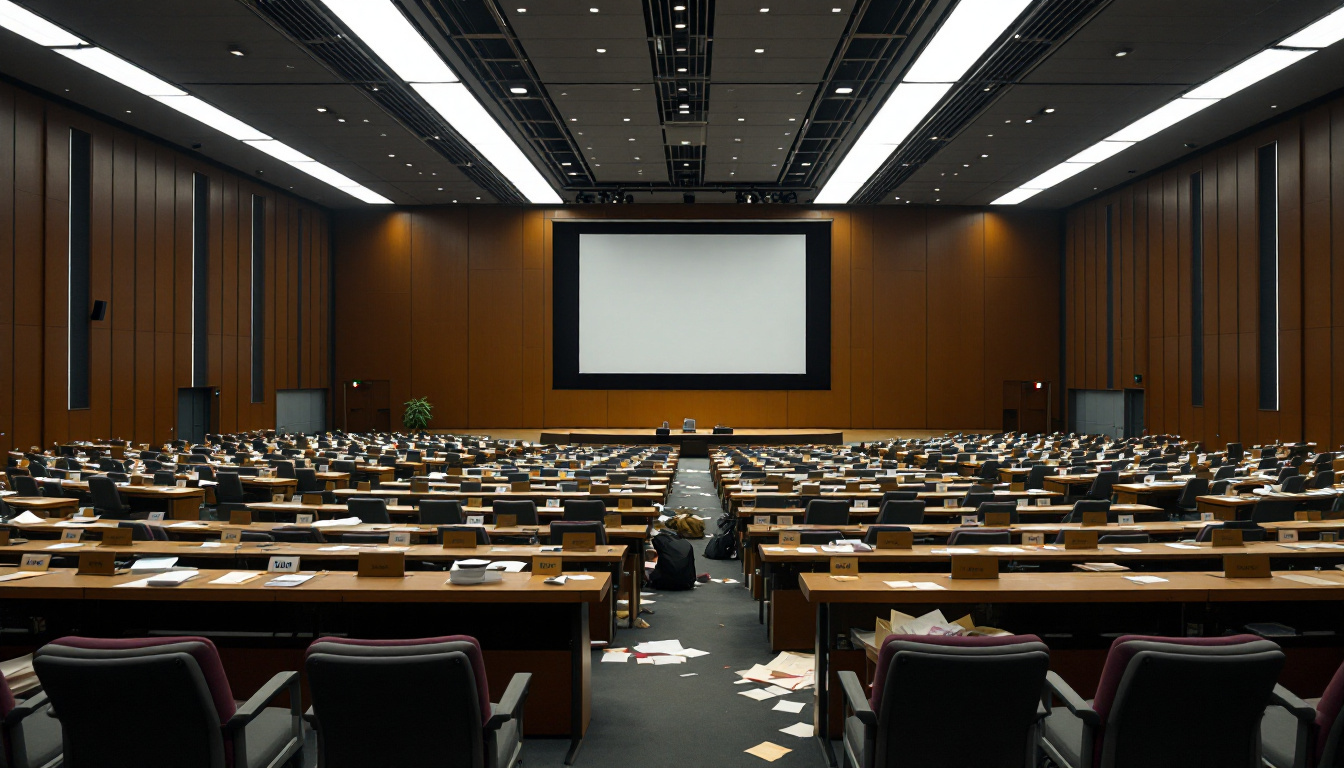
Murat Kurum, Turkey's Environment Minister and the president of COP31, stood at the podium in Antalya and said the quiet part into the microphone: "I understand that there is no agreement on this text. For that reason, these decisions have not been adopted."
That's the man running the summit announcing — to the room, on the record — that the whole thing failed.
The COP31 climate talks in Antalya, Turkey, were supposed to be the year the global climate movement finally locked in enforceable commitments. Almost 100,000 people attended. 102 leaders from 95 countries showed up. Seven international organizations participated. The negotiations ran two full days past the scheduled conclusion, making it the longest-running climate summit in history.
The result: nothing binding. Not a watered-down version. Not a compromise framework. Nothing adopted.
The collapse centered on fossil fuels — specifically, the complete absence of fossil fuel language from the proposed agreement text. The EU rejected the draft outright because it didn't include commitments on fossil fuel reduction. Oil-producing states were accused of "hijacking" the summit by blocking any language that would threaten their revenue streams. Kurum tried to paper over the wreckage with diplomatic niceties — "This text was not imposed on anyone" — but the translation was simple: nobody agreed to anything because nobody was willing to give up anything.
This is the annual rhythm of the climate conference circuit. Fly tens of thousands of delegates to a Mediterranean resort city. Produce thousands of pages of draft text. Argue for two weeks. Extend the deadline. Argue for two more days. Announce that "progress was made" while adopting zero enforceable commitments. Repeat next year in a different resort city.
The 100,000 attendees didn't walk to Antalya. They didn't arrive by sailboat. The carbon footprint of simply staging COP31 — the flights, the hotels, the motorcades, the catering, the security apparatus for 102 world leaders — dwarfs the annual emissions of some of the small island nations whose survival these summits claim to be fighting for. The conference about saving the planet requires burning enormous amounts of fuel to hold.
What makes the COP31 failure different from previous near-misses is the completeness. Past summits produced vague frameworks that let everyone claim partial victory. Paris in 2015 produced an agreement that was technically "binding" but practically unenforceable. COP28 in Dubai at least produced language about "transitioning away" from fossil fuels, however toothless. COP31 couldn't even get to toothless.
The EU wanted fossil fuel language. The oil states refused. Neither side moved. Two extra days of negotiation produced nothing but Kurum standing at a podium explaining that the decisions hadn't been adopted.
Ninety-five countries. A hundred thousand people. The longest climate summit ever held.
No deal.