
Dan and Lisa Sheley wanted to send their kid to a Catholic preschool in Colorado using the state's Universal Preschool program. The state said no — not because the school failed any safety inspection or flunked an academic review, but because it's Catholic. Seventy-nine other faith-based schools managed to join the UPK program. The ones that teach what the state doesn't like about Catholic doctrine got shown the door.
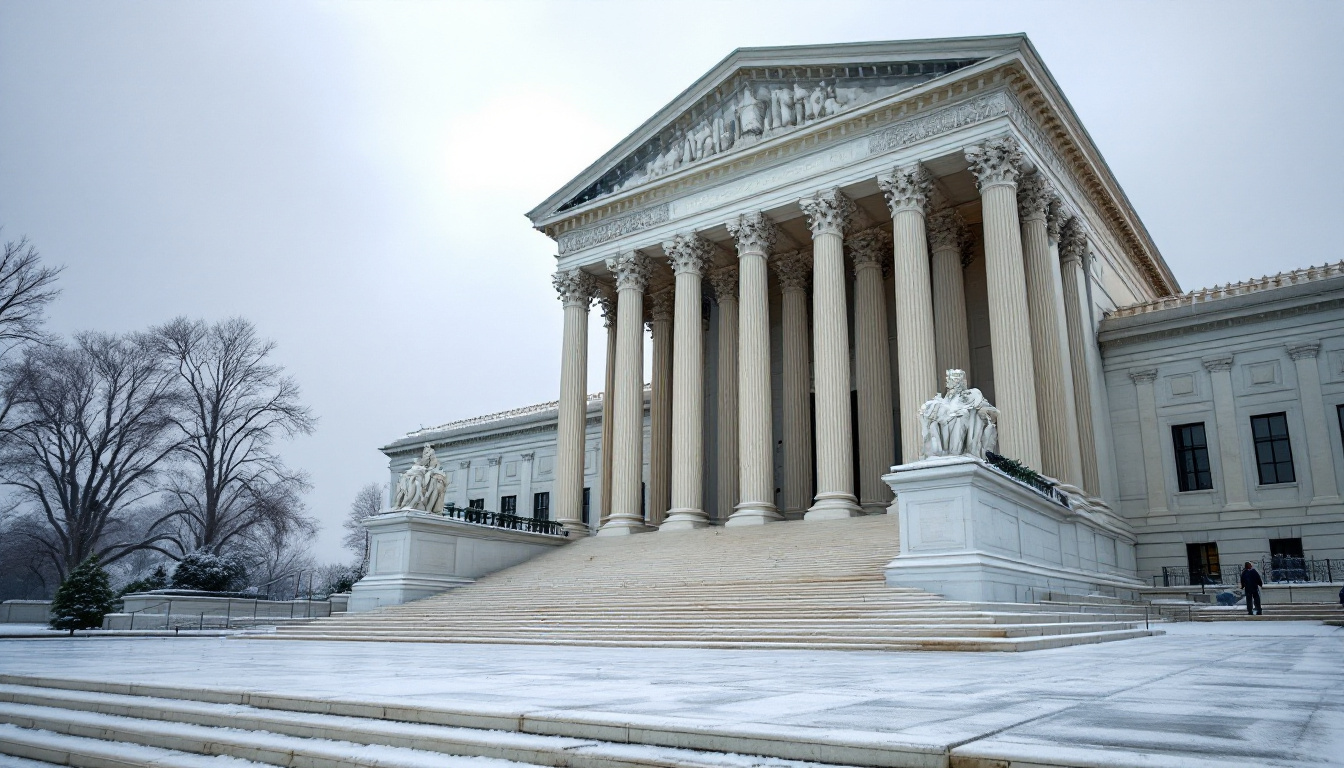
The Supreme Court heard oral arguments on November 3 in St. Mary Catholic Parish v. Roy, and what came out of that courtroom should worry anyone who thinks the First Amendment still means something.
The case centers on Colorado's Universal Preschool program, which funds up to 15 hours per week of early childhood education at participating schools — public, private, secular, and religious. The Archdiocese of Denver, along with St. Mary Parish in Littleton and St. Bernadette Parish in Lakewood, applied to participate. Colorado's Department of Early Childhood, run by director Lisa Roy, told them they were "remain welcome to participate" — as long as they were "subject to the same equal-opportunity requirements" as everyone else.
Those requirements, in practice, meant Catholic schools had to abandon Catholic hiring and admissions standards. Agree to hire staff who contradict Church teaching, or no funding. The result: a 20% enrollment decline across Archdiocese of Denver schools, and two schools closed entirely.
Jax Gonzalez of One Colorado, an LGBTQ advocacy group, framed the state's position this way: "Colorado's rule is simple: If you take public money to teach kids, you serve every kid." Simple. Clean. And completely dishonest about what's actually happening. The state isn't asking Catholic schools to serve every kid. It's asking them to stop being Catholic schools. There's a difference between opening the door to all students and gutting the religious identity that makes the school what it is.
Chief Justice John Roberts pressed the issue during arguments, noting that in a prior Maine case the Court struck down a policy that "expressly discriminated against religious schools on its face" — then added, "That's not the case here." The Colorado law doesn't name Catholic schools. It just happens to exclude them by requiring things no faithful Catholic institution can agree to.
Justice Sonia Sotomayor, to her credit, asked one of the sharper questions of the session: "What you're basically saying is, we can exclude people merely because exposure to them would cause us harm." Justice Ketanji Brown Jackson went further, suggesting the state was crafting "a special rule for religious schools" — a phrase that should give Colorado's lawyers heartburn, since that's exactly what the Free Exercise Clause is supposed to prevent.
The Tenth Circuit Court of Appeals upheld Colorado's position in 2025, and a federal judge had sided with the state back in June 2024. The lower courts treated the nondiscrimination conditions as neutral rules of general applicability — the same framework the Court established in Employment Division v. Smith back in 1990. The problem is that the 2022 Maine ruling already moved the goalposts. The Court said then that states can't exclude religious schools from programs available to secular ones simply because they're religious. Colorado's argument is that it's not excluding them for being religious — just for acting religious.
That distinction is doing a lot of heavy lifting. A school that teaches Catholic doctrine but doesn't practice it in hiring can participate. A school that actually lives its faith cannot. Colorado built a compliance regime that treats religious conviction as a disqualifying condition, then called it equal treatment.
A ruling is expected by July. If the Court sides with the Archdiocese, it closes a loophole that states have been quietly exploiting since the Maine decision — write the discrimination into the conditions instead of the eligibility criteria, and pretend it's neutral. If it sides with Colorado, every state in the country gets a blueprint for defunding religious education one requirement at a time.
Seventy-nine faith-based schools found a way to comply. The ones that couldn't are the ones whose faith actually costs them something.