
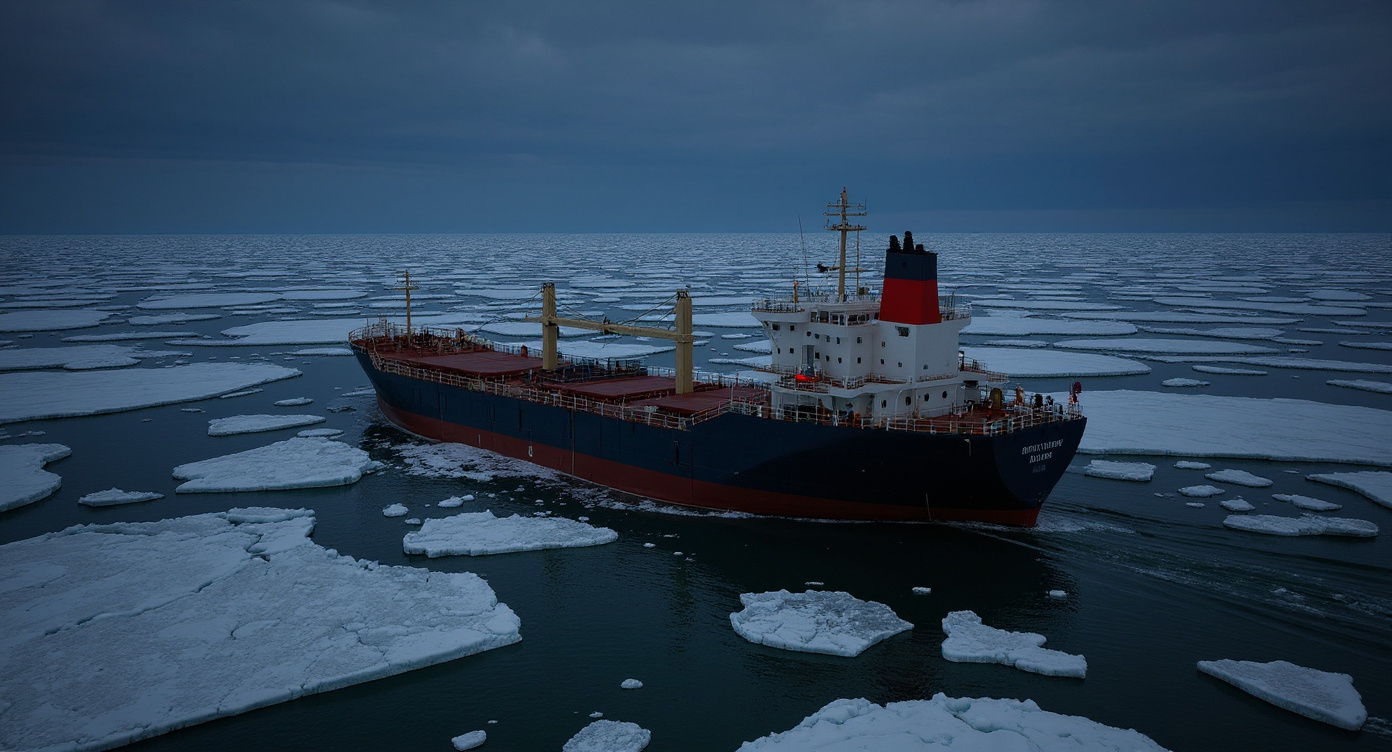
A Chinese cargo vessel named the Dubai Tower just completed a three-week voyage from the port of Qingdao to Teesport, England — through the Arctic. Not around Africa. Not through Suez. Through the Northern Sea Route, the frozen shortcut at the top of the world that most people still think of as impassable.
It's China's first regular cargo service through the Arctic. And it landed about six months after every major outlet in America spent a full news cycle laughing at President Trump for talking about Greenland.
The New York Times — the same paper that treated Trump's Greenland focus like a punchline — ran a piece on September 8th acknowledging the strategic weight of what just happened. Their framing was cautious, almost academic: "Is this smart business — or more of a bold geopolitical move?" As if the answer isn't obvious to anyone who's been paying attention.
Dexter Roberts, a nonresident senior fellow at the Atlantic Council who focuses on China, didn't mince around with hedged questions. "This is a big deal," Roberts told the Times. "China is the only non-Arctic country that is actually doing something like this."
The only one. Not Russia, which actually borders the route. Not any European power with centuries of maritime history. China — a country with no Arctic coastline — is the one building a commercial shipping lane through the top of the planet.
Roberts added a detail that should keep Pentagon planners awake at night: "China is a master at doing things that don't seem commercial, necessarily, in the beginning. Eventually, it all adds up to a geostrategic win."
That's the pattern. Build a port in Sri Lanka that nobody asked for. Fund an African rail network that doesn't pencil out. Open an Arctic route that looks like a curiosity. Then one morning you wake up and China controls the chokepoints of global trade. Belt and Road wasn't a slogan — it was a blueprint, and the Arctic is the next page.
Trump saw this. He talked about it publicly. He raised the strategic importance of Greenland and the Arctic in terms plain enough for a cable news segment. The response from the media and the foreign policy establishment was unified mockery. Late-night hosts did bits. Columnists wrote op-eds about presidential delusion. Denmark's government issued a formal rebuke.
Nobody in that chorus asked the only question that mattered: what happens if someone else gets there first?
Now we know. China got there first. Not with warships — with a cargo vessel and a commercial route, which is how China always starts. The military infrastructure follows once the economic footprint is established. That's the playbook in the South China Sea. That's the playbook in Djibouti. Now it's the playbook in the Arctic.
The media's position requires believing two things simultaneously: that Trump was an unserious fool for raising Greenland's strategic importance, and that China's Arctic shipping route is a serious geopolitical development requiring urgent coverage. Those two ideas cannot live in the same paragraph, but the New York Times is giving it a shot.
The Northern Sea Route cuts thousands of miles off the Asia-to-Europe journey compared to the Suez Canal. As ice coverage shrinks, the window for transit widens. Whoever controls the infrastructure, the ports, the refueling stations, and the diplomatic relationships along that route controls a new artery of global commerce.
China just drew first blood on that map. And the people who spent months telling us the Arctic didn't matter are now writing concerned features about what it means.
Funny how that works. The man they called delusional identified the threat before the think tanks published the white paper.