
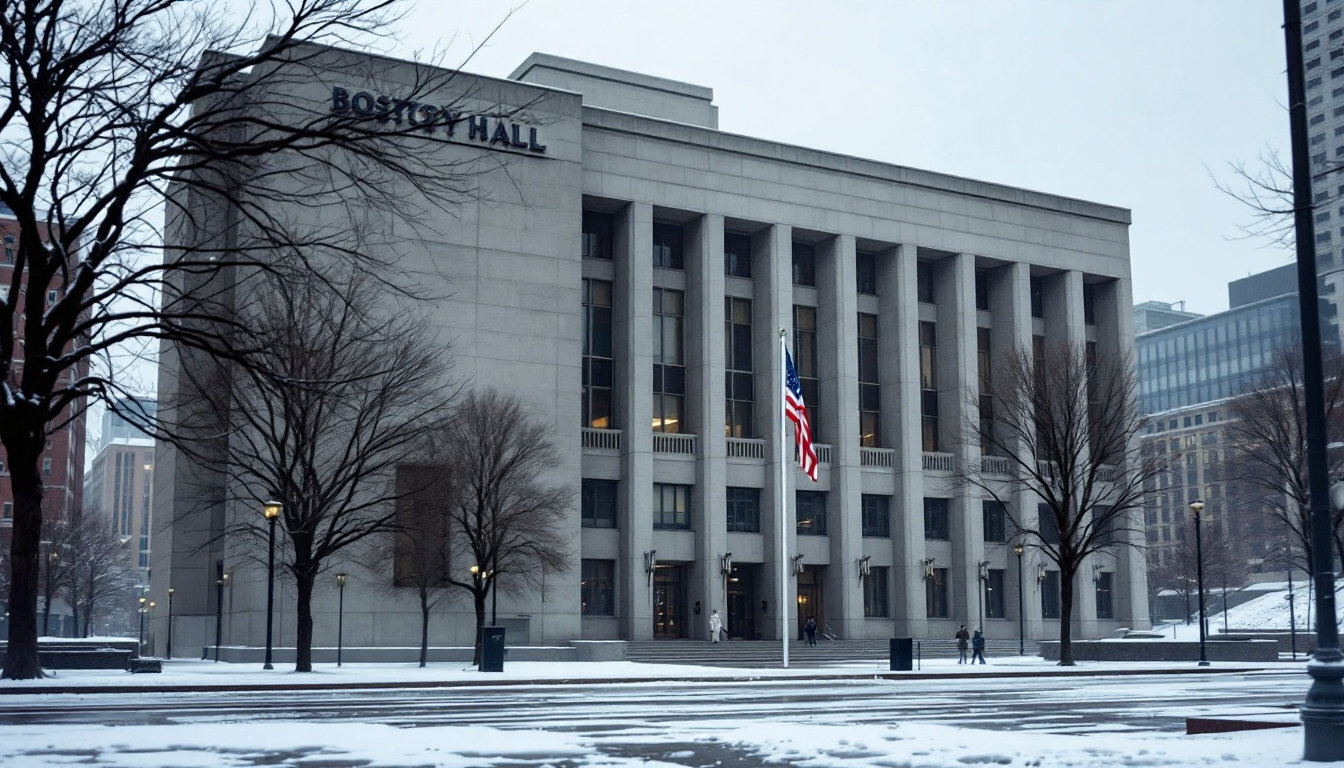
Boston City Councilman Benjamin Weber introduced a resolution declaring Thanksgiving a "National Day of Mourning" — and his colleagues passed it by unanimous voice vote. Not in March. Not during some abstract policy review. During the same month Americans were buying turkeys and arguing about whether to deep-fry them.
The timing wasn't an accident. It was the point.
The resolution describes what the rest of us call Thanksgiving as "the English colonists' invasion of Wampanoag homelands." It reframes the 1621 harvest celebration as an act of colonial violence and formally aligns the Boston City Council with a counter-holiday created by Native American leaders in 1970. The full text reads, in part, that "the colonization of North America by European settlers led to the systematic dispossession" of indigenous peoples — language that could have been pulled from a sophomore sociology syllabus.
The council resolved "that the Boston City Council recognizes the National Day of Mourning and joins our Indigenous residents" in observing it. Unanimously. By voice vote. No dissent. Not one councilmember thought it might be worth noting that the city of Boston — founded by those same English colonists — might owe its existence to the history it just condemned.
Just The News reported on the resolution as part of a broader pattern of progressive officials reframing Thanksgiving. And Boston isn't operating in a vacuum. Former Democratic Wisconsin gubernatorial candidate Francesca Hong was caught on a 2020 clip urging Americans to "cancel Thanksgiving" and "stop celebrating colonialism." David Crowley, the Democratic nominee who takes office as Wisconsin's next governor in January, represents the same ideological lane — the wing of the party that treats national holidays as PR problems to be managed rather than traditions to be shared.
The resolution carries no legal weight. It doesn't cancel your dinner. It doesn't rename the fourth Thursday of November on any federal calendar. It's symbolic.
But that's exactly what makes it useful to the people who passed it. Symbolic resolutions don't require enforcement. They require repetition. Pass enough of them in enough cities and the cultural assumption shifts — Thanksgiving stops being a default celebration and starts being something you have to defend. The goal isn't to outlaw the holiday. The goal is to make you feel slightly guilty while you're eating it.
This is the same mechanic that turned Columbus Day into Indigenous Peoples' Day in dozens of municipalities before anyone voted on it nationally. No single resolution did the work. The accumulation did. Each one moved the needle just enough that the next one felt less radical.
The Wampanoag people have a legitimate historical grievance. What happened after 1621 is well-documented and doesn't require a city council resolution to acknowledge. But Weber's resolution doesn't exist to serve the Wampanoag. It exists to serve a political class that treats American traditions as liabilities — monuments to tear down, holidays to rebrand, symbols to disclaim.
The voice vote was unanimous. In a city of 650,000, not one elected representative on the council thought the week of Thanksgiving was the wrong time to declare Thanksgiving a day of mourning.
They passed it in November.