
In Cobb County, Georgia, a 21-year-old man was found hanging. In Brookfield, Wisconsin, a 39-year-old. In Albany, New York, a 58-year-old named Earl Smith. At Delta State University in Mississippi, a student named Demartravion Reed. Each death was a tragedy. Each one was investigated by local law enforcement. And in case after case, the finding came back the same: suicide.
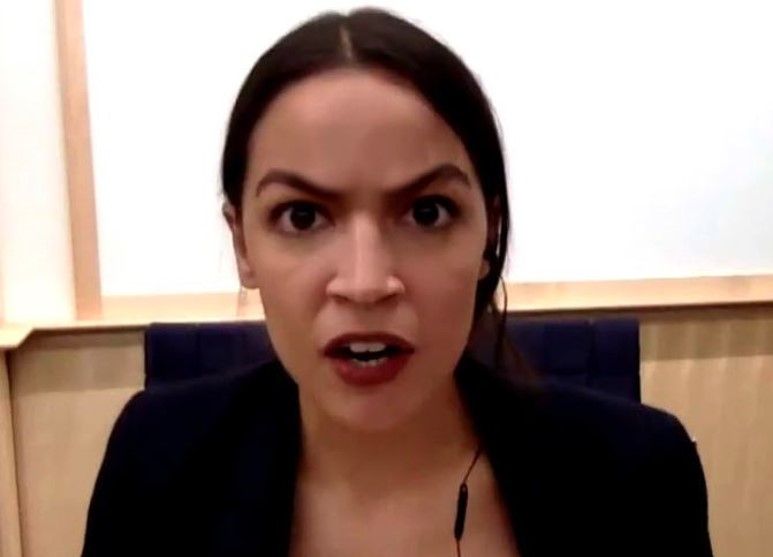
Rep. Alexandria Ocasio-Cortez didn't wait for the investigations. She had a narrative to build.
Ocasio-Cortez posted on X that "this year, there have already been 10 reported hangings of Black people in the U.S." and announced she had signed onto a letter from Rep. Ayanna Pressley of Massachusetts demanding a federal investigation. Approximately 50 House Democrats co-signed the same letter. The framing was unmistakable — these were "modern-day lynchings," a coordinated horror that demanded federal intervention.
The phrase was engineered to evoke Emmett Till, the 14-year-old murdered in Mississippi in 1955, whose name Congress attached to the Emmett Till Antilynching Act enacted in 2022. That legislation exists because real lynchings happened in this country. Invoking it over cases that hadn't been investigated yet wasn't caution. It was arson.
Then the investigations finished.
Cobb County — suicide. Brookfield — suicide. Albany — suicide. Delta State — suicide. One by one, the cases Ocasio-Cortez and Pressley used to manufacture a racial panic collapsed under the weight of actual evidence gathered by actual investigators.
Only one case out of the entire group remains under homicide investigation: the death of Tasia Fortune in Jackson, Mississippi. And even that case doesn't fit the narrative. The suspect isn't a racial vigilante. It's Terence Bernard Anderson, the father of one of Fortune's children, who was arrested on weapons charges in connection with the case.
Matt Whitlock, a former Senate staffer, put the math plainly: "Every death is a tragedy, but what do you think 'widespread' means if only one of these was actually a homicide..."
That's the question 50 House Democrats apparently never asked before signing a letter that accused the country of tolerating a wave of racial murder.
Matt Van Swol, a former Energy Department official, pointed to the Fortune case specifically: "In the last 'lynching' of a Black woman, the media conveniently left out the prime suspect in the case was her Black boyfriend..." The detail was available. The congresswoman and the reporters who amplified her claim chose not to include it.
The structure of this episode is worth understanding because it repeats. A handful of unrelated tragedies occur. Before investigators finish their work, a member of Congress welds them together into a pattern that implies organized racial violence. Cable news runs the framing for 72 hours. Fifty colleagues sign on. The letter goes to the Attorney General and the FBI Director — in this case, Todd Blanche and Kash Patel — demanding federal resources be redirected.
Then the facts arrive and every single pillar of the accusation folds. But the retraction never comes. No follow-up letter. No post on X saying the investigations concluded and the findings didn't support the claim. The panic gets memory-holed, and the emotional residue — the sense that Black Americans are being hunted — stays lodged in the public consciousness.
X's Community Notes flagged Ocasio-Cortez's original post with the investigative findings. That's where most people learned the cases had been ruled suicides — not from the congresswoman who raised the alarm, and not from the outlets that amplified it.
Pressley's spokesperson, Ricardo Sanchez, has not issued a correction. Neither has Ocasio-Cortez. Fifty co-signers, zero follow-ups.
The Emmett Till Antilynching Act was passed because the country recognized a real historical evil and decided to codify accountability for it. Using that legacy as a prop — attaching it to cases where no lynching occurred — doesn't honor the law. It hollows it out. Every false alarm makes the next real one harder to hear.
Fifty signatures on a letter. Zero on a correction.