
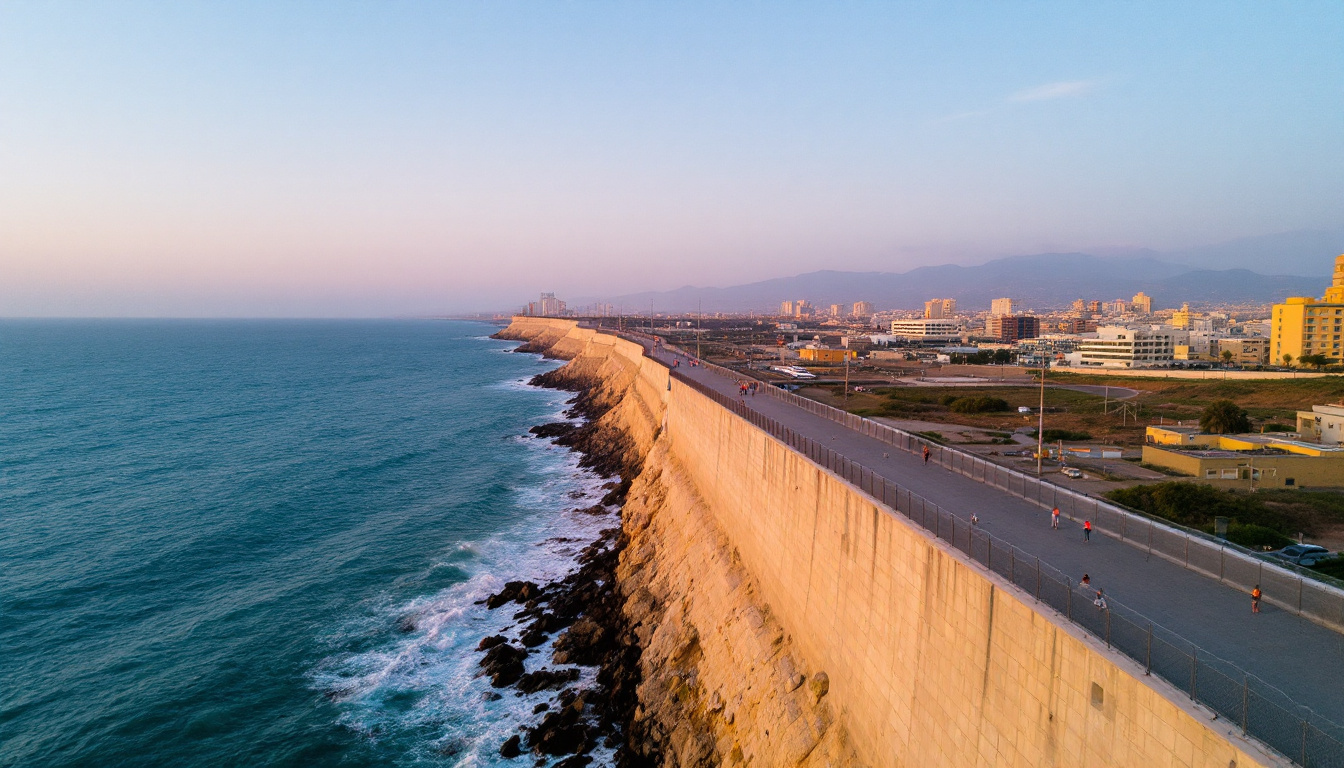
Enrique Serrano owns a women's clothing store in Ceuta, the tiny Spanish enclave on the northern coast of Africa. He closed early this week. "I'm not opening this afternoon because the situation is extremely tense," he told reporters. His shop is one of dozens shuttered across the city as 60,000 migrants from Morocco and sub-Saharan Africa poured across the border in just a 24-hour period.
Ceuta has 80,000 residents. Do the math.
The migrants came by sea, swimming around the Tarajal breakwater — a border seawall that's supposed to mark where Morocco ends and Spain begins. The Guardia Civil said they were "massively entering from the sea" and that police were overwhelmed. Others scaled fences by land. Many shouted "Viva Espana!" as they arrived, which is the kind of detail that would be funny if the streets of a European city weren't being turned into open-air toilets while migrants bathed in public fountains. The New York Post described the scene as "an apocalypse." At least 18 people died in the crossing — drowned in the water or crushed in stampedes at the breakwater fence.
Ceuta's regional president, Juan Jesus Vivas, declared an "absolute humanitarian and social emergency" and demanded Madrid send troops. Alberto Nuñez Feijoo, the leader of Spain's center-right People's Party, went further: "The situation in Ceuta is desperate. We are facing a national security crisis."
Madrid's response was to reject a national emergency declaration. The Interior Ministry said such measures don't cover migration crises. He should have called it what it really is: an invasion of military-aged men. Instead, Spanish officials in Madrid promised "additional resources" and deployed 60 armed forces troops to reinforce the border. Sixty. For a city that just absorbed a population nearly its own size overnight. Interior Minister Fernando Grande-Marlaska announced he would visit Ceuta to "evaluate conditions," which is government-speak for showing up after the building's already on fire to check the smoke detectors.
How did we get here? Earlier in July, Spain's Supreme Court ruled that migrants intercepted at sea attempting to reach Ceuta or Melilla cannot be returned to Morocco. So the legal off-ramp was removed weeks before the largest border breach in the enclave's history. That's not a coincidence. That's a green light.
Then there's the policy architecture underneath. Prime Minister Pedro Sánchez's government recently launched a program granting legal status to approximately 500,000 undocumented migrants already in Spain. Applications exceeded one million. The message that sends across the Strait of Gibraltar is not subtle. If you make it, you stay. If you apply, you're covered. And if 60,000 of you show up at once, the government sends 60 soldiers and a cabinet minister with a clipboard.
Migrant activist Zakaria Zarroqui compared this to the May 2021 surge, when roughly 10,000 Moroccan and sub-Saharan migrants entered Ceuta within days. That was treated as a historic crisis at the time. This is six times larger.
American observers might look at Ceuta and think it's a European problem. It's not. It's a preview. The same legal architecture — courts blocking deportations, executive amnesty programs pulling millions into the system, border enforcement starved of resources while politicians promise to "evaluate" — exists on this side of the Atlantic too. The faces change. The flags change. The math doesn't.
Spain has 60 troops guarding a border that 60,000 people just walked through. That's not a ratio. That's a resignation letter.